24 hours in Lycabettus, Athens
A project made in collaboration with Will F. Stringer, and Felix Keilhack during the Athens Summer School in Visual Ethnographic Practices in 2024, organised by Ethnofest (Athens Ethnographic Film Festival).
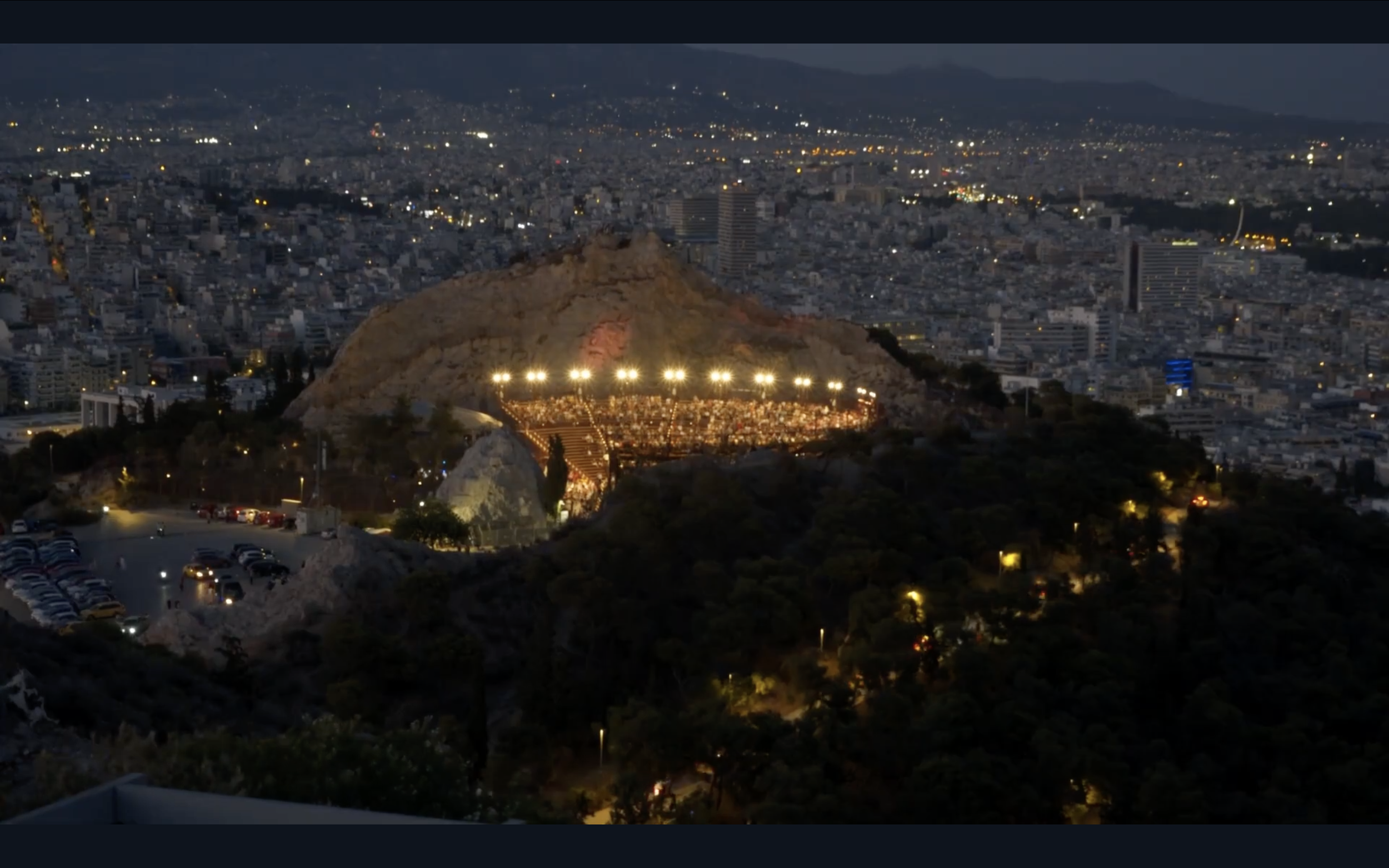
24 hours in Lycabettus explores the multiple facets and meanings behind the Lycabettus hill in Athens, Greece. Crammed between a sea of concrete, this green area serves as a sanctuary. Its mornings are quiet, ruled by ants and cicadas with occasional runners and dog walkers interrupting the silence. The temperature rises during midday. As the hill provides the perfect vantage point of the city, the fire-prevention authorities launch drones to patrol for possible wildfires while the curious news journalists interview them during the process. The hill is flooding with tourists by the afternoon, who take the long paved route to the peak to capture the perfect sunset, while the locals opt for lower, less crowded spaces. As the sun sets, the army performs its duty, lowering the Greek flag and bidding farewell to the day. A merchant is trying to make a living by selling jewellery to the people who are packed in the peak. Couples are gathering in the shadows to share their first sneaky kiss. During the evening, cars line up outside the hill’s amphitheatre, as it hosts plays and concerts during the summertime. As the night grows, and the fans head home, the parking lot fills with young people who want to admire the view of their city with their friends and some music, to showcase their drifting skills, and to race each other. Of course, that catches the attention of the police.
Along with a visual illustration of the multitudes that this hill represents, the researchers Will Stringer, Felix Keilhack and Evita Belegri ask different people what the hill means for them, while they are having a discussion themselves on whether to impose their own social theories on this entity or not.